
Water spraying from a basement pipe, a ceiling dripping after a cold night, a puddle spreading across the floor: what you do in the next few minutes decides how much of your home gets wet. The short answer: get away from any water near electrical, shut off your main water valve, then call a plumber. This guide walks you through the first 10 minutes, step by step.
Water coming in right now? Call 513-574-0025, 24 hours a day. Geiler plumbers serve Cincinnati, Northern Kentucky and Southeastern Indiana.
First, is it burst or frozen?
The steps depend on what you're seeing.
| What you see | What it likely means | What to do |
|---|---|---|
| Water spraying, dripping, or pooling from a pipe, wall, or ceiling | A pipe has split, or a joint has failed | Follow the 10-minute checklist below, starting with safety |
| No water, or only a trickle, from a faucet on a cold morning | A frozen pipe that may not have split yet | Go to "If the pipe is frozen but not leaking" below |
| A leak that starts on the first warmer day after a freeze | Ice split the pipe; the leak shows once the ice melts | Treat it as a burst pipe and shut off the water |
| Water bubbling up in your yard, the sidewalk or the street | Often a utility main or service line, not your indoor plumbing | Call your water utility (numbers below), then call us if water is getting inside |
The Northern Kentucky Water District says that if you turn on a faucet and only a trickle comes out, you should suspect a frozen pipe.
Before you touch anything: stay safe
Water and electricity don't mix. Check these before you start the steps:
- Water near outlets, cords, appliances, or the electrical panel? Don't touch them, and don't walk through standing water to reach them. The CDC says to turn off power at the main breaker if circuits are wet or near water, but never to enter standing water to reach it. If you can't get there from a dry spot, call an electrician.
- Ceiling sagging or bulging with water? Get everyone out of that room. A wet ceiling can come down.
- Smell gas? Leave the house and call your gas utility or 911 from outside.
If none of these apply, move on to Step 1.
The 10-minute checklist
Minutes 0–2: Shut off the main water valve
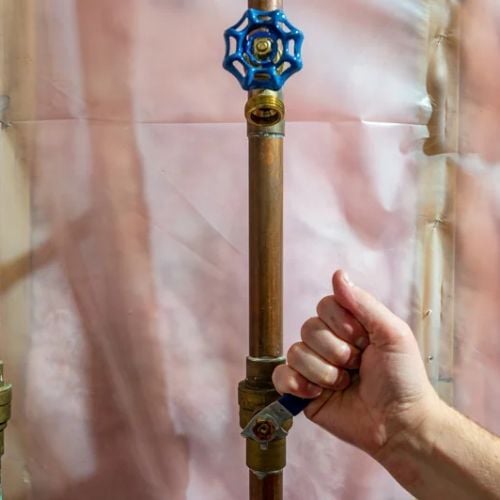
Turning off the main water valve is the most important thing you can do. Until it's closed, water keeps pouring out of the broken pipe.
Where to find it: In most Cincinnati and Northern Kentucky homes with a basement, the main shutoff sits where the water line comes through the foundation wall, near the water meter. The Northern Kentucky Water District says the main valve is usually along a basement wall next to the water meter or where the supply line enters the building. In homes without a basement, check a utility room, a crawl space access point, or near the water heater.
How to close it:
- Lever handle (ball valve): turn it a quarter turn, so the handle sits crosswise to the pipe.
- Round wheel (gate valve): turn it clockwise until it stops. Don't force it. Older wheel valves can break if you crank too hard.
Can't find it, or it won't turn? Call us at 513-574-0025 and tell the dispatcher. Our dispatcher can help you look for the valve over the phone.
Do this today if nothing's leaking yet: find your main shutoff, make sure it turns, and hang a tag on it. During a burst pipe isn't the time to go looking for it.
Minutes 2–4: Cut power to the wet area, but only from a dry spot
If water has reached outlets, light fixtures, appliances, or anything plugged in, turn off those circuits at the breaker panel, or the main breaker. Do this only if the panel and the floor in front of it are dry. The CDC warns never to turn power on or off while standing in water, and to have an electrician check the system before you turn power back on.
Minutes 4–5: Turn off the water heater
With the main water off, your water heater stops getting fresh water. Greater Cincinnati Water Works advises that if pipes split, you should turn off the water and your water heater right away.
- Gas water heater: turn the control knob to "Pilot" or "Vacation."
- Electric water heater: switch off its breaker, but only from a dry spot.
- Tankless: turn it off at its power switch or breaker.
Minutes 5–7: Open faucets to drain the lines
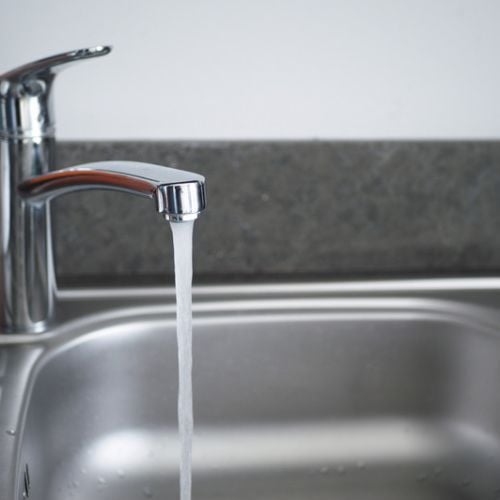
Open cold-water faucets around the house, starting with the lowest one, such as a basement laundry sink or an outdoor spigot. Flush the toilets. This drains the water still in the pipes, so less ends up on your floor. Opening faucets reduces the pressure on any water still in your pipes.
Minutes 7–8: Call a plumber
Call 513-574-0025. Tell the dispatcher:
- where the leak is (basement ceiling, under the kitchen sink, a crawl space)
- whether you were able to shut off the main
- whether water reached anything electrical
Geiler plumbers are dispatched from their own homes around the region, not from one central shop, so help is often closer than you'd think.
Cincinnati → /emergency-plumber-in-cincinnati
Northern Kentucky → /emergency-plumber-in-northern-kentucky
Minutes 8–10: Protect your things and take photos
- Move rugs, electronics, boxes, and important papers to a dry spot.
- Put buckets under drips. Use towels and a mop on hard floors, and stay out of standing water near anything electrical.
- Take photos and video before you clean up: the broken pipe, wet walls and ceilings, and damaged belongings. We recommend photographing damage for a possible insurance claim, noting the affected items and areas.
- Call your insurance agent once things are under control.
What not to do
- Don't turn the water back on to "see where it's coming from." Leave the main off until a plumber has found and fixed every split.
- Don't use an open flame to thaw a pipe. The American Red Cross warns against blowtorches, kerosene or propane heaters, charcoal stoves, and any other open-flame device. Greater Cincinnati Water Works also warns against electric welders and electric heat tape, which can cause fires.
- Don't count on tape or a clamp as the fix. A hardware-store leak clamp can slow a small split until help arrives. It isn't a repair.
- Don't wade into water to reach the panel or the valve. If you can't get there from a dry spot, call us and, if needed, an electrician.
If the pipe is frozen but not leaking
A frozen pipe hasn't necessarily split, but it could be split under the ice. When the ice melts, that's when the water comes out.
- Find your main shutoff first so you can close it quickly if a leak appears as the pipe thaws.
- Open the faucet that the frozen pipe feeds. As the ice melts, moving water helps thaw the rest, according to the Northern Kentucky Water District.
- Warm the pipe gently with a hair dryer, an electric heating pad, or towels soaked in hot water. A Greater Cincinnati Water Works manager recommends waving a hair dryer back and forth along the pipe's full length so it warms slowly instead of in one spot.
- Keep going until full water pressure returns, then check your other faucets. If one pipe froze, others may have too.
- Watch for leaks along the pipe as it thaws. If you see one, close the main and call us.
Call a plumber instead if you can't find the frozen section, it's inside a wall or ceiling, or it won't thaw. Those are the situations where the Red Cross says to call a licensed plumber.
When to call right away
Call 513-574-0025 now if:
- water is spraying, or a leak doesn't stop after you close the main
- you can't find the main shutoff, or it won't close
- water has reached outlets, the electrical panel, your furnace or your water heater
- a ceiling is sagging, stained or dripping
- the frozen pipe is inside a wall, ceiling or crawl space you can't safely reach
- no faucets in the house have water, and it's below freezing
- you're away from home and a neighbor or an alarm reports water
What happens when Geiler arrives
- We confirm it's safe and that the water is off.
- We find every break, not just the one you can see. A hard freeze can split more than one spot along the same line.
- We repair or replace the damaged section with the right materials for your home, and fix it to code. Geiler's union-trained plumbers complete a 5-year apprenticeship, pull permits when required, and follow all codes and regulations.
- We turn the water back on slowly and check for leaks before we leave.
- We show you how to keep it from happening again, such as insulating the pipe, sealing a draft, or rerouting a line away from an outside wall.
Geiler trucks are fully stocked, so we can finish many repairs in one visit.
Whose pipe is it?
If water is coming up outside, in your yard, the sidewalk or the street, the break may be on the utility's side. Greater Cincinnati Water Works takes leak and break reports at 513-591-7700, 24 hours a day, and notes that the property owner is responsible for the service line and plumbing on private property. In Northern Kentucky, contact the Northern Kentucky Water District at (859) 578-9898.
If the break is inside your home or on your side of the meter, call us.
Before the next cold snap
Most burst pipes start as frozen pipes. A few steps now lower the risk:
- Find and tag your main shutoff valve.
- Disconnect garden hoses. If your outdoor faucets have a separate indoor shutoff, close it and drain the faucet, as Greater Cincinnati Water Works recommends.
- Insulate pipes in crawl spaces, garages, and unheated basements.
- Keep garage doors closed, and open sink cabinet doors on outside walls during hard freezes.
- Let a faucet drip when temperatures drop well below freezing.
- Leaving for a trip? Keep the heat on, and ask someone to check the house.
"6 Ways To Keep Your Pipes from Freezing"
Burst pipe help across the region
Geiler has been the plumber Cincinnati-area families call since 1885. We're a fourth-generation, woman-owned company, and our licensed, union-trained plumbers answer emergency calls day and night.
- Cincinnati and the Ohio side: 24/7 Emergency Plumber in Cincinnati
- Northern Kentucky (Boone, Kenton and Campbell counties): 24/7 Emergency Plumber in Northern Kentucky
- Southeastern Indiana: call 513-574-0025.
FAQ
Is a burst pipe an emergency?
Yes. A burst pipe can flood your home in minutes. That water can reach wiring, soak drywall and flooring, and lead to mold. Shut off the main water valve and call a plumber right away, day or night.
Should I turn off my water if a pipe is frozen but not leaking?
It's a good precaution. Cold-weather guidance reported by LINK nky advises shutting off the main and opening indoor faucets if pipes may be frozen, so there's less flooding if one splits. If you're thawing a pipe yourself, keep the faucet it feeds open, and be ready to close the main.
Why did the leak start after it warmed up?
Water expands as it freezes, which can split a pipe. While the water is still frozen, the ice plugs the split. When it thaws, the water comes out. That's why many burst pipes show up on the first warmer day after a cold snap.
Can I turn the water back on once the leak stops?
Not until the pipe is repaired. A leak that stops is often still there; the line may just have drained. Leave the main off until a plumber has fixed and tested the line.
Water is coming up in my yard. Who do I call?
Call your water utility first: Greater Cincinnati Water Works at 513-591-7700, or the Northern Kentucky Water District at (859) 578-9898. If the break is on your property, or water is getting inside, call Geiler at 513-574-0025.
Do you answer at night in Northern Kentucky?
Yes. Our 513-574-0025 number covers Northern Kentucky too, and reaches the same dispatch team, 24/7.