

Quick answer:
If your second floor is consistently hotter than downstairs in summer, it's rarely just one problem. The four most common causes are the stack effect (warm air naturally rising and collecting upstairs), a single thermostat on the main floor that shuts the system off before the upstairs finishes cooling, ductwork that was never sized or sealed well enough to push enough cool air up top, and solar heat gain through the roof and upstairs windows.
Simple fixes like running the fan continuously, sealing attic ducts, and shading west-facing windows can shave a few degrees off the gap, but homes with a persistent 5-to-10-degree difference usually need a dedicated cooling solution for the upstairs, such as a ductless mini-split system, which delivers conditioned air directly to the hot zone without relying on the home's existing ductwork.
Why Is My Upstairs Always Hotter Than Downstairs?
The short answer is physics plus HVAC design. Warm air is less dense than cool air, so it naturally rises through stairwells, open floor plans, and gaps around light fixtures and plumbing chases, collecting on the second floor.
On top of that, your upstairs sits directly under your roof, which can hit surface temperatures of 130 to 150 degrees Fahrenheit on a sunny summer afternoon, radiating heat down through the attic and ceiling.
Most two-story homes compound this with a single-zone HVAC system that only has one thermostat, and it's almost always on the cooler main floor.
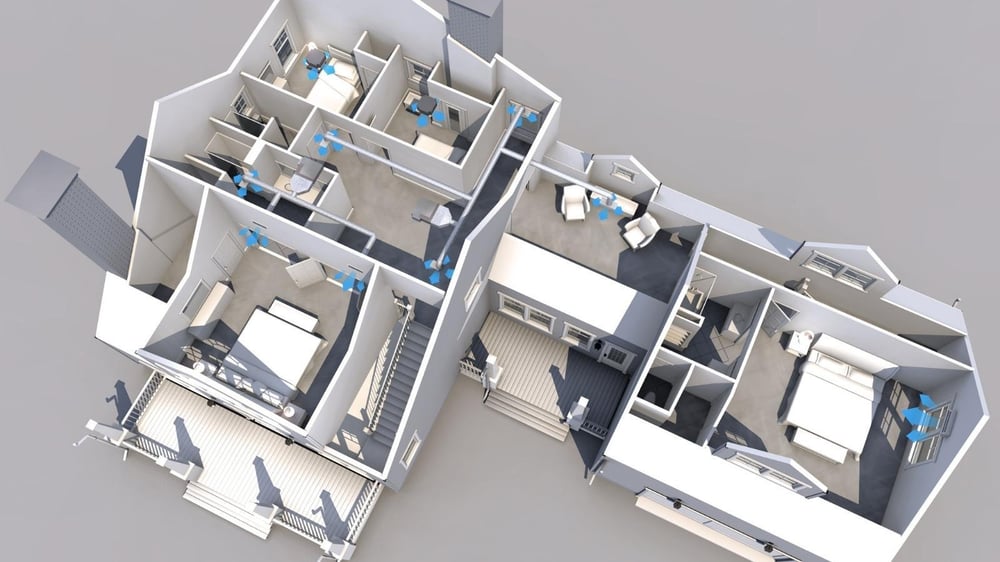
Cause 1: The Stack Effect — Is Heat Rising the Real Problem?
Yes, and it's the most basic reason your second floor runs warmer. Warm air moves upward through stairwells and small gaps in the building envelope, settling near the ceiling of the highest occupied floor in your house.
This is sometimes called temperature stratification, where the air in your home sits in layers of different temperatures rather than mixing evenly. Cooking, hot showers, and even heat from electronics and people on the main floor add warm air that eventually rises upstairs too.
How to fix it: Run your HVAC fan on "on" instead of "auto" so it keeps circulating air between floors even when the system isn't actively cooling, and use ceiling fans set to spin counterclockwise in summer to push cool air back down.
These low-cost adjustments typically shave 2 to 4 degrees off the imbalance, though they won't fully close a large gap on their own.
Cause 2: Does Thermostat Placement Make the Upstairs Hotter?
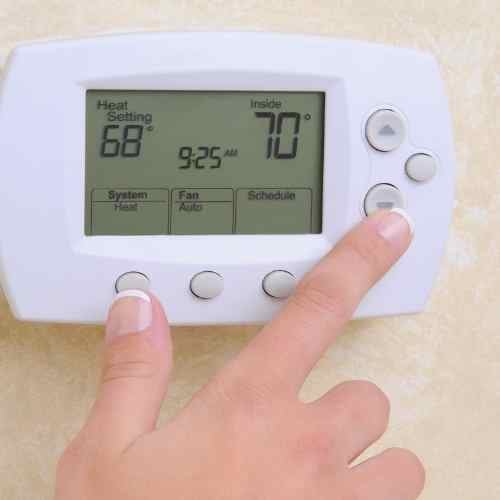
Yes, and this is one of the most overlooked causes. In most two-story homes, the single thermostat sits on the main floor, so the system shuts off as soon as that floor reaches the set temperature, whether or not the upstairs has finished cooling.
The system isn't malfunctioning; it's simply answering the wrong question, because it can only "see" the temperature where the thermostat is located.
Homes built with a single-zone system treat the entire house as one temperature zone, which works fine for a ranch-style home but often falls short in a multi-story layout.
How to fix it: A zoned HVAC system with separate thermostats and dampers for each floor lets you set independent temperatures upstairs and downstairs.
For homes where a full zoning retrofit isn't practical, a ductless mini-split system effectively creates its own zone for the second floor with its own remote or thermostat, solving the same problem without rerouting the whole house's ductwork.
.png?width=500&height=281&name=www.geiler.comhubfssplit%20system%20heating%20and%20cooling_The%20geiler%20company%20(2).png)
Cause 3: Are My Ducts Actually Reaching the Second Floor?
Often, no — not with enough force or volume to keep up. Second-floor rooms commonly have longer, narrower duct runs than first-floor rooms, and pushing cool air upward against gravity through those runs is harder on the system.
According to ENERGY STAR, 20 to 30% of the air moving through a typical duct system is lost to leaks, holes, and poorly sealed connections, and that loss is worse when ducts run through a hot attic that can reach 130 degrees or more.
A related, often-missed issue is insufficient return-air capacity upstairs: if there's only one return grille on the main floor, the second floor becomes pressurized and can't circulate air properly, even if supply vents are wide open.
How to fix it: Start with the free checks: replace a dirty air filter, make sure all upstairs vents and dampers are open, and confirm furniture isn't blocking return grilles. If those don't close the gap, sealing and insulating attic ductwork, adding upstairs return capacity, or resizing undersized branch ducts are contractor-level fixes worth having evaluated.
Cause 4: How Much Does Sun Exposure Affect the Upstairs?
More than most homeowners expect. Upper floors often get more direct, unobstructed sunlight than lower floors, especially on south- and west-facing rooms that catch strong afternoon sun, while trees, porches, or neighboring structures may shade the ground floor. Thin, uneven, or missing attic insulation lets that roof heat transfer straight through the ceiling into upstairs bedrooms, turning the ceiling itself into a slow, constant heat source.
Older single-pane windows and dark curtains upstairs can make this worse by absorbing and re-radiating additional heat into the room.
How to fix it: Close blinds or use blackout curtains on west- and south-facing upstairs windows during peak afternoon sun, and check that attic insulation meets current recommendations (R-49 or higher in many climates). Attic ventilation matters too. Blocked or poorly designed vents trap heat that then pushes down into your living space.
When Do These Fixes Stop Being Enough?
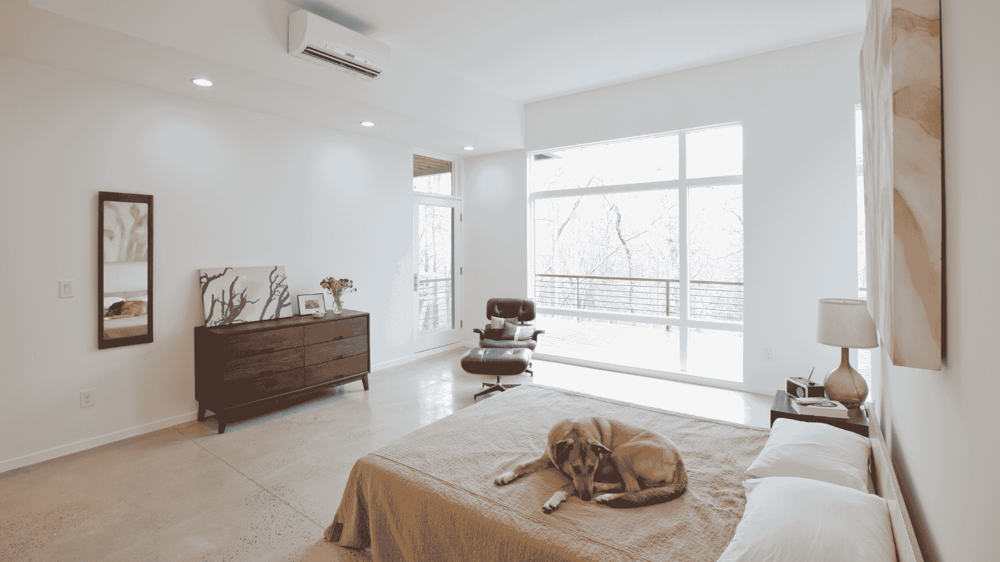
If you've tried the easy wins (fan settings, filters, curtains, open vents) and your upstairs is still running 5 to 10 degrees hotter than downstairs, the underlying issue is usually structural: an aging single-zone system, ductwork that was never designed to properly serve the second floor, or a home that simply doesn't have adequate cooling capacity upstairs to begin with.
Homes with furnace-only heating and no dedicated upstairs cooling face an even more basic version of this problem, since there's no existing capacity to rebalance in the first place. For more background on how home comfort issues like this show up around Greater Cincinnati, Northern Kentucky, and Southeastern Indiana, browse The Geiler Company blog.
Why a Ductless Mini-Split Is Often the Best Fix for a Hot Upstairs
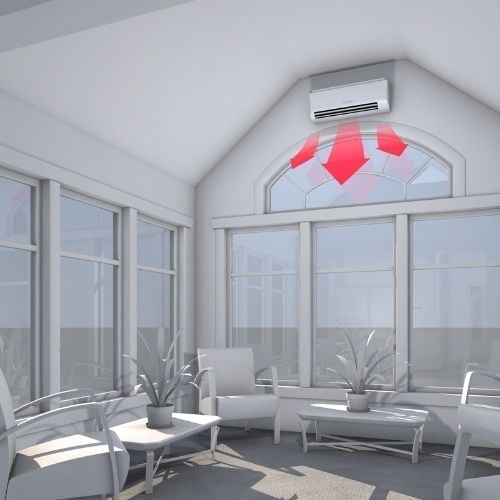
A ductless mini-split solves the upstairs heat problem at its source instead of trying to force more air through ducts that were never sized for the job. Because it installs an indoor unit directly in the hot room or hallway, connected to an outdoor compressor through a small wall penetration, it delivers conditioned air exactly where the heat is collecting, with its own independent thermostat control.
That means no attic duct losses, no fighting a main-floor thermostat that shuts the system off too early, and no expensive full-zoning retrofit of your existing ductwork. It's also a practical option for homes with furnace-only upstairs heating and no central air at all, since it adds both cooling and heating capacity without new ductwork.
Frequently Asked Questions

Ready to Cool Your Upstairs for Good?
If fan settings, filters, and curtains haven't closed the gap, a dedicated cooling solution for your second floor may be the most effective long-term fix. Visit Geiler's Ductless Mini-Split Systems page to see how a mini-split can bring lasting comfort to the hottest room in your house, backed by The Geiler Company's service to Cincinnati, Northern Kentucky, and Southeastern Indiana since 1885.